


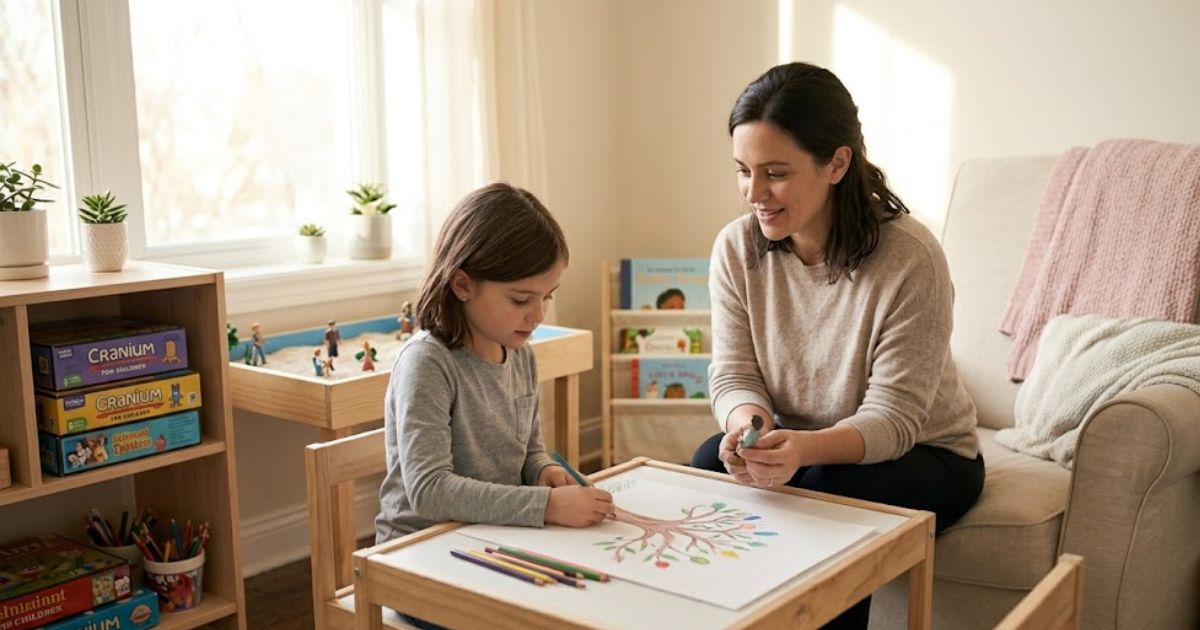
Psychotherapy for children and adolescents is a form of help addressed to minors who struggle with mental disorders, emotional, behavioral or social difficulties. It consists of regular meetings with a therapist, the course of which is adapted to the patient’s age. It takes place with the consent of a parent or legal guardian.
When is it worth using psychotherapy for children and adolescents?
Participation in therapy is recommended primarily in the case of such problems as:
- Self-aggression – self-aggressive behaviour includes m.in. self-harm or excessive pushing of the body;
- eating disorders – anorexia and bulimia are conditions that affect many teenagers;
- aggression – its manifestation is not only physical but also psychological violence, e.g. bullying of peers;
- suicidal thoughts – their cause may be m.in. depression or hatred at school.
- addictions – there are addictions among minors m.in. from psychoactive substances, games and telephone;
- problems in social relationships – this category includes m.in. shyness, isolation from the environment and lack of ability to maintain bonds;
- personality disorders – their first symptoms often occur during adolescence, and a quick start of therapy facilitates treatment;
- neurodevelopmental disorders – i.e. ADHD and autism spectrum disorders.
What does psychotherapy for children and adolescents look like?
Various therapeutic currents are used in working with children and adolescents, including behavioral-cognitive, psychodynamic and systemic therapy. In many situations, family therapy turns out to be helpful, which allows you to look at the functioning of the whole family and eliminate irregularities that contribute to the child’s problems.