


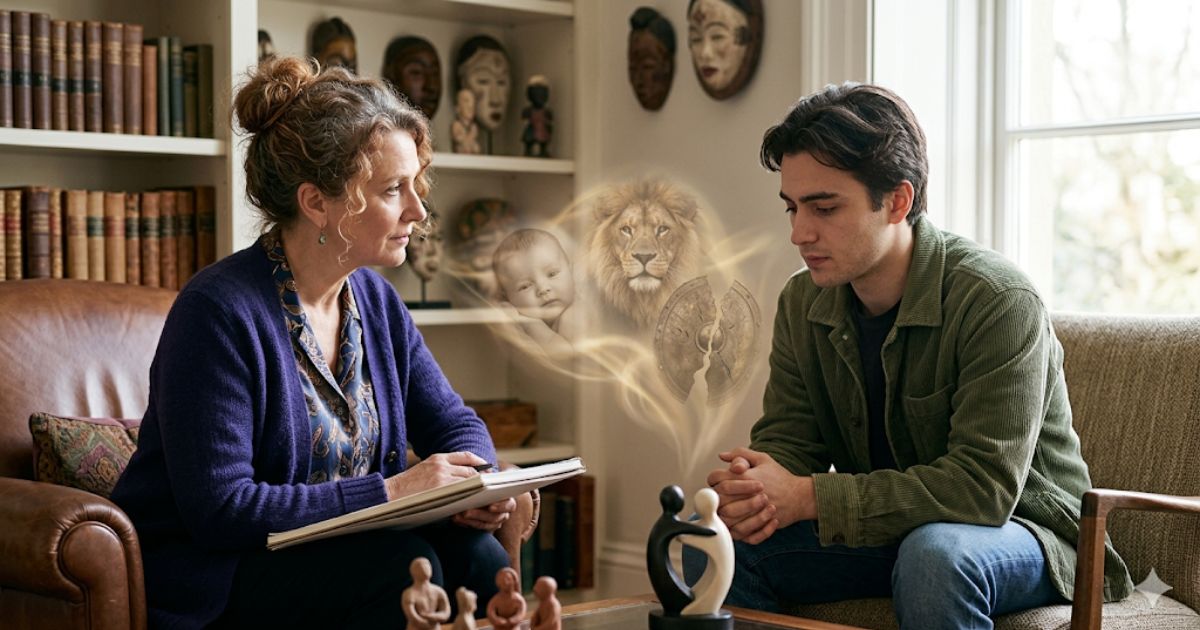
Klein therapy is a treatment method based on the concepts of the British psychologist and psychoanalyst Melanie Klein. It is based on the theory of the relationship with the object, i.e. the focus on the role of early childhood relationships with caregivers and their impact on adult life.
Basic assumptions of Klein therapy
According to Melanie Klein, a healthy relationship between a child and a caregiver (usually the mother) is the foundation necessary for proper mental development. This is due to the child’s total dependence on caregivers during childhood.
The quality of care shapes the child’s perception of the world, their self-confidence and their attitude towards other people. If the relationship with caregivers is not based on unconditional love and does not provide a sense of security, fears, pain and a sense of loneliness develop.
Schizoid-paranoid position and depressive position
Melanie Klein introduced the concepts of schizoid-paranoid position and depressive position. Both concern the way the child’s relationship with the mother is experienced. The schizoid-paranoid position is typical for a small child who is unable to feel contradictory emotions towards one person. A mother is therefore either good or bad.
When the child begins to combine these two images, we are dealing with a depressive position. It usually develops in the second half of the first year of life. The child discovers that the mother is not black and white – depending on the situation, she can be a good or bad character. Because of this, he feels love and anger towards her at the same time, which is the cause of great tension.
Echoes of these positions are visible in adult life. Their manifestations are m.in. tendency to extreme judgments and lack of ability to combine love and anger towards the same person.