

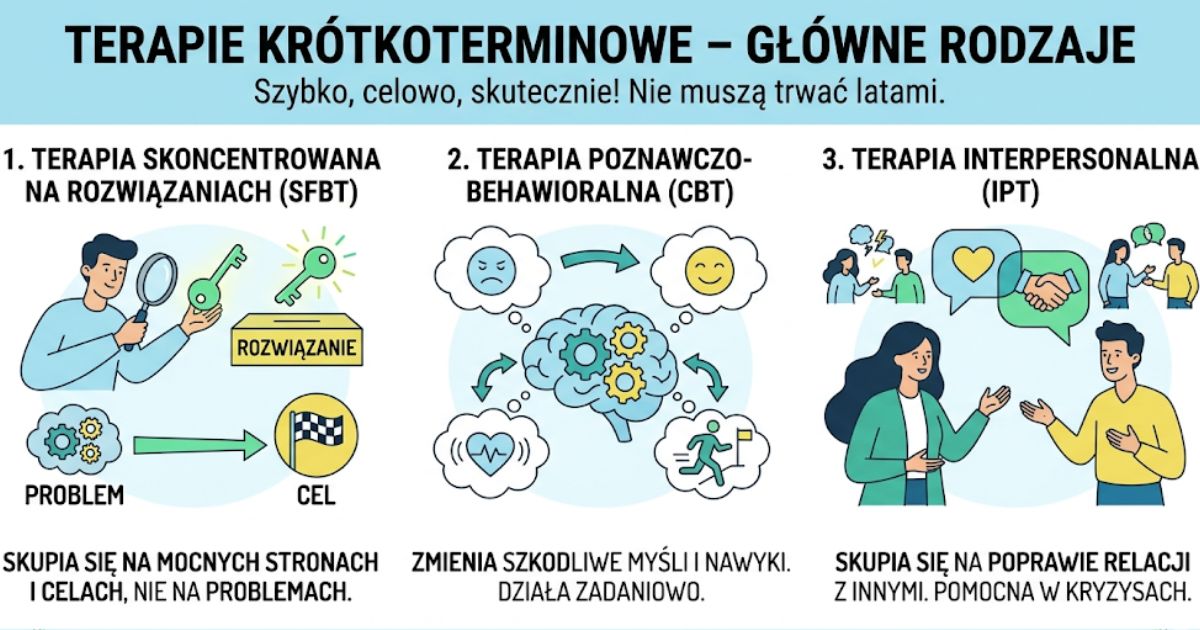
Short-term therapy is a process that lasts from a few weeks to several months. It works especially well in crisis situations and when the causes of the patient’s problems are easy to define. Treatment goals can be achieved through the use of various therapeutic streams. Popular types of short-term therapy include cognitive behavioral therapy (CBT), solution-focused therapy, systemic therapy, and intensive short-term psychodynamic therapy.
Cognitive Behavioral Therapy (CBT)
Cognitive behavioral therapy (CBT) assumes that people’s thoughts and behaviors are shaped as a result of learning. Dysfunctional ways of responding can be modified by reinforcing positive patterns. For this purpose, m.in is used. cognitive restructuring and dialogue with the inner critic.
Solution-Centered Therapy (TSR)
A characteristic feature of TSR is the lack of analysis of the causes of the problem. Instead, the therapist helps the patient determine their own needs and create a desired image of the future. It then supports him in finding solutions that enable him to achieve his goals.
Systemic therapy
Systemic therapy focuses on the patient’s functioning in the environment, i.e. family, couple or social group. This approach assumes that the problems of the individual are always related to the dysfunctions that occur in his system. It is therefore important to look at the interactions and ways of communication in the environment.
Intensive Short-Term Psychodynamic Therapy (ISTDP)
Intensive short-term psychodynamic therapy is based on the same assumptions as regular psychodynamic therapy. It emphasizes the relationship between the emotional state and the way we function and the conscious and subconscious. An important role is played by m.in. working with front-line defenses, i.e. defense mechanisms that make it difficult to cooperate with the therapist.