

Fairy tale therapy, also called fairy tale therapy, is one of the methods of art therapy. We use it primarily in our work with children of preschool and early school age.
Spis treści
What is fairy tale therapy?
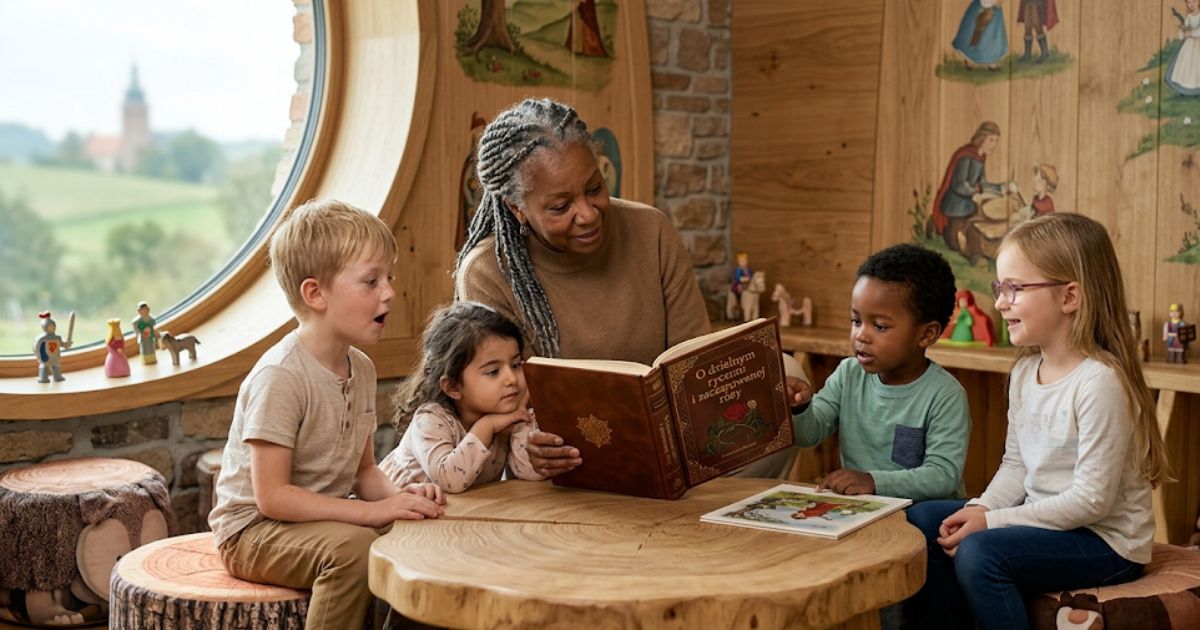
Fairy tale therapy consists of reading and analysing fairy tales together. The child easily identifies with the characters, their adventures and the problems they encounter. Thanks to this, fairy tale therapy has a therapeutic and didactic function. It supports emotional development, teaches you to overcome difficulties and better understand your feelings. It works very well in situations where the child experiences stress or anxiety, e.g. due to a change of school or the separation of parents. In addition, it brings positive effects when working with children who are shy and have difficulty establishing relationships with their peers.
We understand the concept of a fairy tale broadly here – we use both traditional fairy tales and other genres of children’s literature. We always choose works appropriate to the age of the child and the problems they are struggling with.
The history of fairy tale therapy
The history of fairy tale therapy derives from bibliotherapy, in which we use various literary genres for therapeutic purposes. The precursor of the method is Bruno Bettelheima, the author of the book “Miraculous and Useful” (1977). He emphasized that fairy tales help children cope with anxiety and tension and support their mental development. In Poland, Irena Borecka made an important contribution to the development of bibliotherapy, pointing to its role in education, upbringing and therapy. Contemporary fairy tale therapy is also associated with Maria Molicka, the author of “Therapeutic Fairy Tales”. The author drew attention to the impact of fairy tales on the reduction of fears, prevention and building the bond between the child and the parent.