


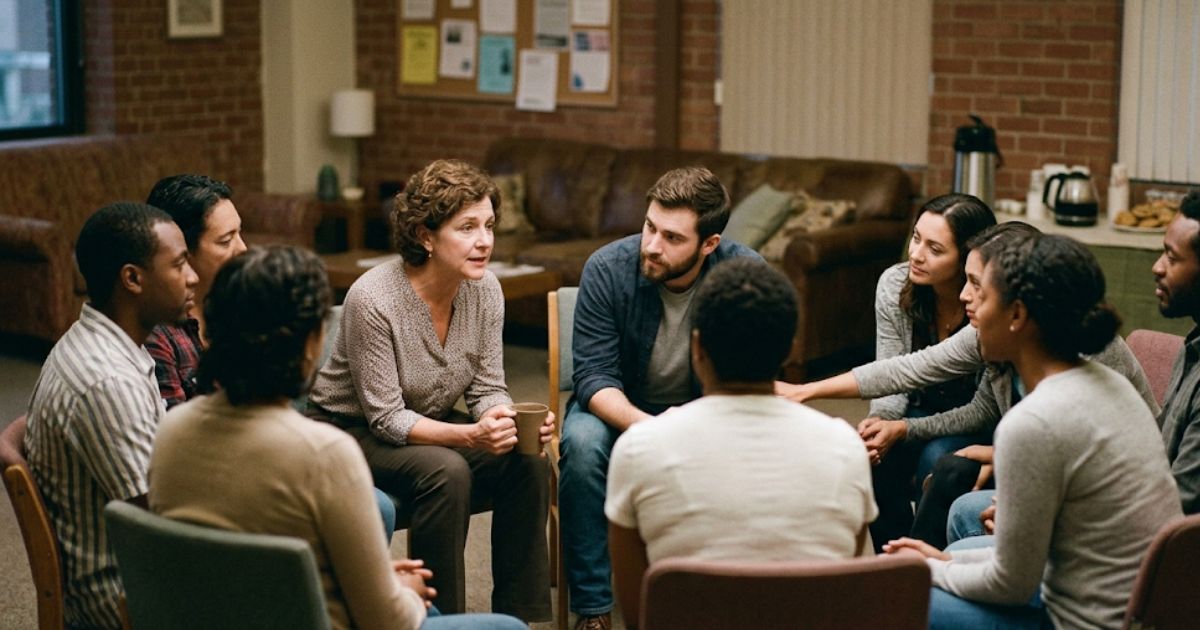
Support groups are a form of psychological and social assistance that involves regular meetings of people with similar experiences and goals. Participants share their experiences and support each other in their efforts to improve their emotional state and well-being.
Types of support groups
Support groups can be divided according to the purpose of the action. We then distinguish:
- Therapeutic groups – bring together people who experience the same mental and emotional problems. Popular examples are AA or DDA groups. This category also includes support groups for people in mourning. In such a group, there is always a qualified therapist who takes care of the proper course of therapy.
- Development groups – are intended for people interested in personal development. They are created for both adults and teenagers.
- Psychoeducational groups – participants are people who want to gain knowledge that will make it easier to cope with challenges. Such a group may focus, for example, on the development of social competences or on strengthening mental resilience.
- Professional support groups – are created mainly for representatives of professions particularly exposed to stress, e.g. for police officers and doctors.
Sometimes a division into open and closed groups is also used. The former can be joined at any time, while the latter have a fixed line-up from start to finish.
What does a support group give?
Participation in a support group is a chance to:
- gaining a sense of support and understanding from people who are struggling with similar difficulties,
- development of social competences,
- exchange of experiences and practical ways of dealing with problems,
- reducing feelings of loneliness and isolation,
- increased self-confidence,
- learning to express emotions openly.