

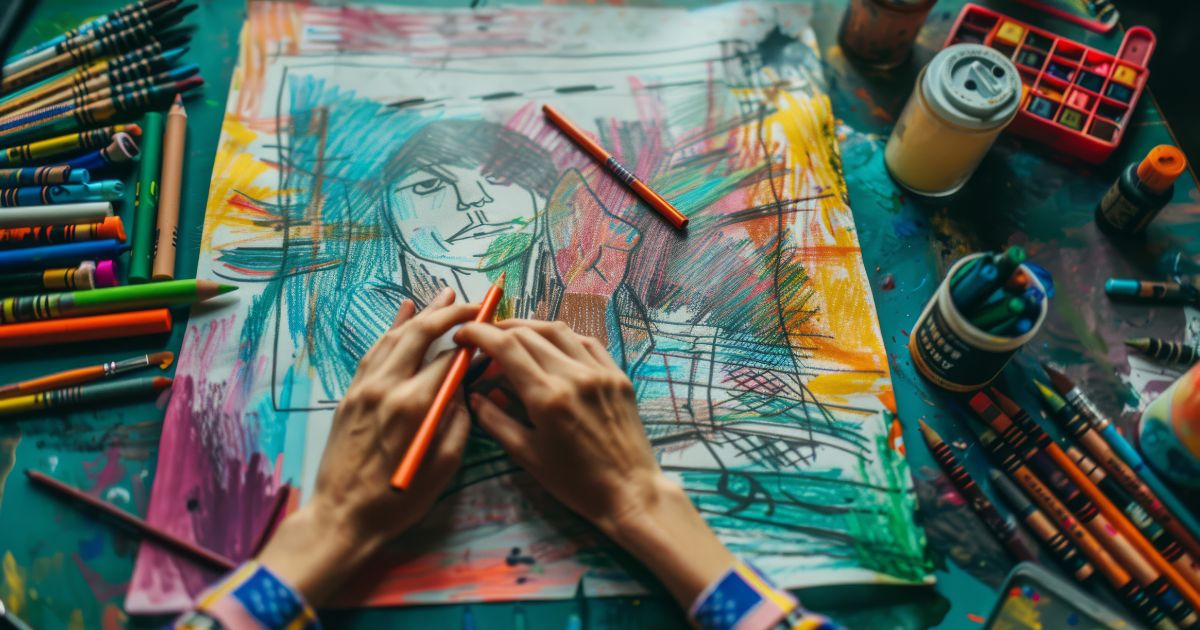
Modern psychotherapy uses various tools. When working with patients, we can use, among other things, art therapy, which helps to express emotions, and relaxation exercises.
What is art therapy?
Art therapy is therapy through art, i.e. a therapeutic method in which the patient expresses emotions and thoughts through creative activities. We use various artistic forms, which is why we distinguish:
- plastic therapy,
- music therapy,
- film therapy,
- choreotherapy,
- theatre therapy,
- bibliotherapy and fairy tale therapy.
We consider the British artist Adrian Hill to be the precursor of therapy through art. It was him in 1942. He introduced the term art therapy after observing the healing effect of creativity on patients. The method developed rapidly, as at that time many World War II veterans appeared in hospitals who struggled with the psychological effects of participating in the fighting.
In Poland, art therapy gained popularity at the turn of the 1980s. and 90s, mainly thanks to Zbigniew Hora.
Currently, we use art therapy primarily in working with patients who:
- struggle with post-traumatic stress disorder,
- have trouble expressing thoughts and feelings,
- undergo depression (according to meta-analyses, art therapy alleviates depressive symptoms, m.in. in women with breast cancer),
- are on the autism spectrum,
- suffer from stress and anxiety.
In addition, art therapy plays an important role in working with children and supports their emotional development. In turn, in the case of seniors, it supports memory and concentration and improves manual dexterity.
Relaxation techniques in therapy
Relaxation techniques that we can successfully include in therapy are:
- progressive muscle relaxation (Jacobson’s method) – during this practice, the patient alternately tenses and relaxes individual muscle parts, which teaches them to recognize tension in the body,
- visualizations – a person imagines a safe space (e.g. a forest or a beach), tries to hear and feel it,
- breathing techniques – m.in. diaphragmatic breathing or the 4-7-8 method (inhale through the nose for 4 seconds, stop for 7 seconds and exhale through the mouth for 8 seconds),
- Schultz training – a technique of deep relaxation, which is based on autosuggestion, or more precisely, inducing sensations of heaviness and warmth in the body,
- Mindfulness (mindfulness training) – consists in focusing attention on the present moment, while observing the sensations that flow from the body.
These methods not only reduce the stress that the patient feels at a given moment, but also teach him how to react, for example, in the event of a panic attack. This is a particularly important m.in. for people who suffer from post-traumatic stress disorder.
Scientific studies confirm the positive impact of many relaxation techniques. What’s more, their effects go beyond mental well-being. Relaxation techniques lower blood pressure and support heart function.
The best results can be obtained with regular practice. Therefore, we should not only perform relaxation exercises during therapy sessions, but also encourage patients to repeat them at home on their own.